Streamworks Blog
"When America faces a crisis, they turn to their hospitals."
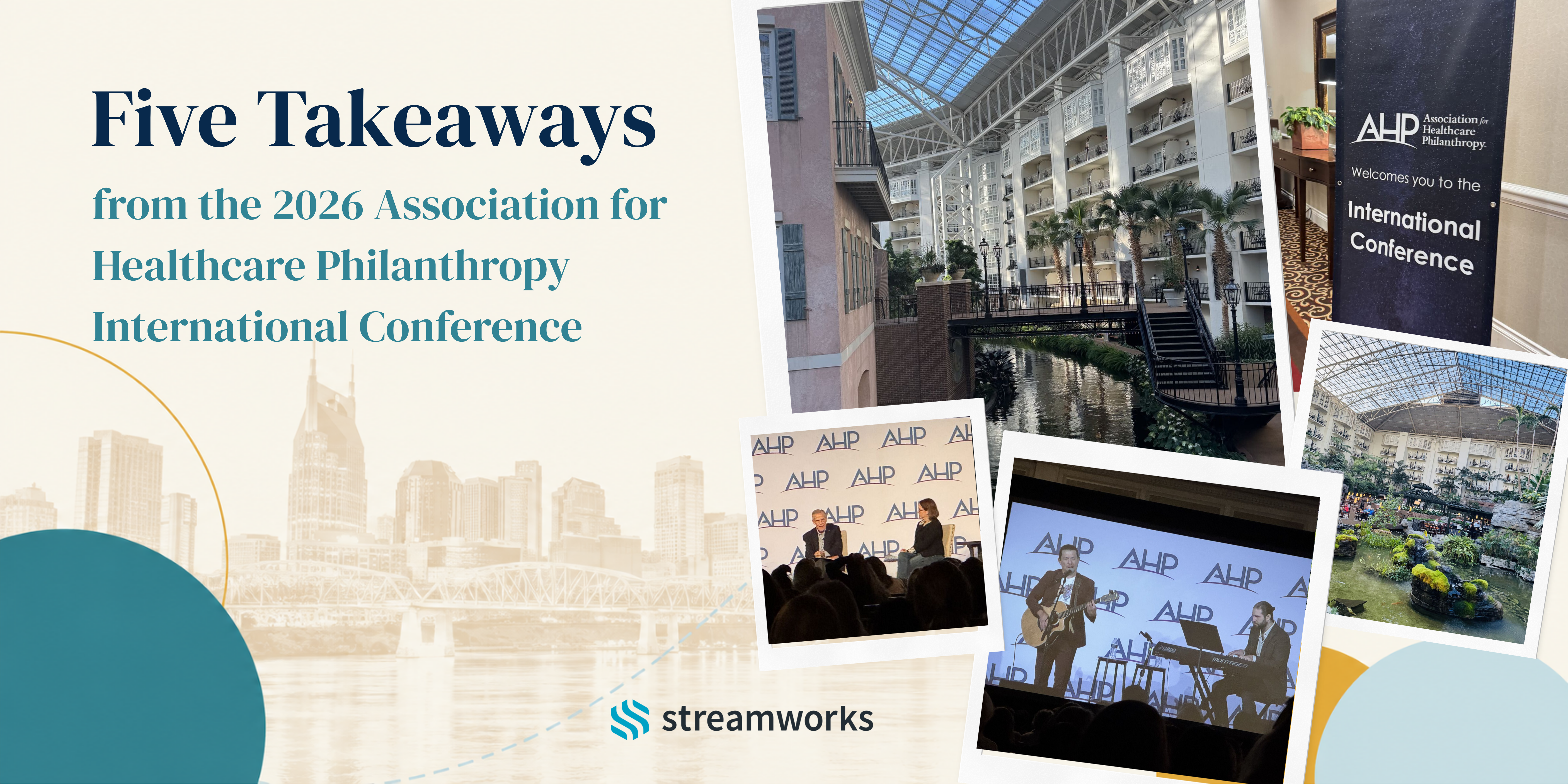
Richard Pollack, American Hospital Association (AHA) President and CEO, shared this powerful reminder during his fireside chat with Association for Healthcare Philanthropy (AHP) President and CEO Alice Ayres at this year's International Conference in Nashville.
But what does that mean for the future of healthcare—and healthcare philanthropy? With access to care becoming an increasingly important topic of conversation, consumer expectations changing, and a persistent nursing shortage challenging healthcare organizations across the country, the continuum of care is more critical than ever.
Healthcare organizations are responding by rethinking how, where, and when care is delivered. They're working to meet the needs of different generations, expand access to services, and provide more connected experiences across the continuum of care. Above all, they're learning to remain adaptable and resilient in a changing world.
Healthcare philanthropy must do the same.
As healthcare organizations face mounting financial pressures and funding uncertainties, philanthropy will play an even more important role in supporting their missions. However, fundraising isn't getting any easier, with donor expectations changing, competition for philanthropic dollars growing, and the strategies that sustain programs continually changing. So how can healthcare foundations prepare for the future?
Following this year's AHP International Conference, our Streamworks team came away with five important takeaways about how healthcare philanthropy can continue to succeed by remaining adaptable, resilient, and focused on building meaningful donor relationships.
And if you take only one thing away from this article, don't leave without considering how you're applying the first takeaway to your fundraising program.
1. Storytelling Matters Now More Than Ever
Generational differences are changing how people experience healthcare.
As convenience and immediate access become increasingly important to consumers, younger generations may expect more digital options, faster answers, and greater flexibility in how they receive care. Older generations, particularly those managing chronic conditions, may have different priorities shaped by long-standing relationships with their care teams and more frequent interactions with the healthcare system.
These differences are important for healthcare philanthropy to understand, especially as we consider the Great Wealth Transfer. As wealth moves from older generations to their children, grandchildren, and other beneficiaries, healthcare foundations have an opportunity to think about how these emerging generations of donors will connect with philanthropy.
What will inspire them to give? How will they want to engage? How can healthcare organizations build relationships with donors whose expectations may look very different from those of previous generations? While the answers will vary, one thing remains constant: the power of a good story.
Think about the stories healthcare organizations have the opportunity to share. The grateful patient whose life was saved because emergency care was available when they needed it most. The nurse who has served her rural hospital for 40 years, caring for generations of families in her community. The surgeon using cutting-edge technology to provide quality treatment that improves outcomes. The young cancer patient who received small comforts during a difficult hospital stay, made possible through the generosity of donors.
These stories do more than highlight the services a hospital provides. They show what compassionate care means to real people and the importance of having that care close to home. As healthcare organizations, particularly rural hospitals, face growing financial pressures, these stories help communities understand the role their facilities play in the lives of their neighbors.
Those are the stories that build emotional connections, inspire generosity, and remind donors why they matter. This theme was reinforced by two memorable voices at AHP.
Country singer and songwriter Natalie Hemby brought a storyteller's perspective to the conference, reminding us of the power of personal experiences and the connections that stories can create.
And keynote speaker Miguel Cervantes, best known for his portrayal of Alexander Hamilton in Hamilton, gave attendees a memorable experience filled with music, humor, and familiar songs. But the most powerful part of his presentation wasn't the music. It was his story.
Miguel and his wife, Kelly, lost their young daughter, Adelaide, to epilepsy. Through their family's experience, they have become advocates for epilepsy awareness and the families navigating the disease. His story was a powerful reminder that behind every diagnosis, every treatment, and every healthcare experience is a person and a family whose lives have been affected.
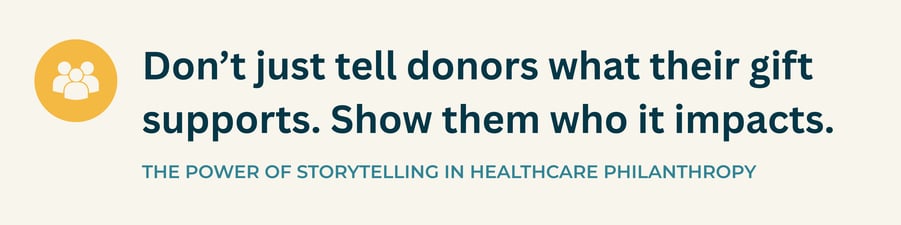
That is where donor connection begins. It's not simply about telling donors what their gift supports. It's about helping them understand the people, experiences, and communities behind the need. That storytelling should be woven throughout the entire donor journey.
2. Give Your Pipeline Some TLC
Your donor pipeline is a reflection of the health of your fundraising program.
If you're not paying attention to how donors move through that pipeline, particularly through mid-level giving, you may be affecting where your program will stand three, five, or even 10 years from now. A strong mid-level giving program isn't just about today's fundraising results. It's about building relationships that can lead to greater engagement, deeper commitment, and future major gifts.
Annual giving and special events are often the entry points through which people first connect with a healthcare foundation. But acquiring a donor is only the beginning. What happens next is critical, especially considering the journey your donors experience after making their first gift. Are they promptly acknowledged and thanked? Do they receive communications that help them understand the impact of their generosity? Are you giving them opportunities to deepen their connection to the organization beyond the next solicitation?
And as their relationship with your foundation grows, are your communications growing with them? A donor who has supported your organization for 10 years shouldn't necessarily receive the same message as someone who made their first gift last month. The same is true for a donor who consistently gives $500 annually compared with someone who contributes $25.
Personalization should go beyond inserting a donor's name into a letter. It should reflect their history, interests, engagement, and relationship with your organization. That might mean sharing stories tied to a particular service line, acknowledging years of loyal giving, recognizing a donor's cumulative impact, or creating opportunities for more personal interactions.
Don't overlook the importance of mid-level giving. Mid-level programs will look different at every healthcare foundation, and that's exactly how they should be. What qualifies as a mid-level gift at a large health system may be very different from what it means at a smaller community hospital. An effective program should be built around your organization's donor base and goals.
It should also consider the geographic and personal connections that matter to your supporters. A donor supporting a rural hospital may respond to different stories and opportunities than someone giving to a large medical center.
The goal isn't simply to move donors into higher giving categories, but rather to create a thoughtful, intentional journey that recognizes their generosity, strengthens their connection to the mission, and helps them see the difference they can make over time. These annual and mid-level donors may become tomorrow's major and planned giving supporters.
3. A Successful Grateful Patient Program Needs Clinician Leadership
Grateful patient programs are another important part of a healthy fundraising pipeline, as they create opportunities to connect individuals to philanthropy through their own experience. Direct response can play an effective role in these programs, particularly in reaching individuals who may not yet have a relationship with the foundation.
A thoughtful grateful patient direct mail or digital program can invite individuals to reflect on their experience and learn about the foundation. Relying exclusively on direct response, however, can mean missing opportunities to engage grateful patients who are already connected to the organization and may want to express their gratitude in more personal ways. That's where clinician leadership comes in.
Clinicians can help create meaningful connections between grateful patients and philanthropy. Physicians, nurses, and other clinical leaders often have established relationships with the individuals and families they serve. Their understanding of the patient experience and the needs of their departments can make them valuable partners in advancing philanthropic priorities. The key is identifying individuals within your organization who are interested in supporting philanthropy and giving them opportunities to participate.
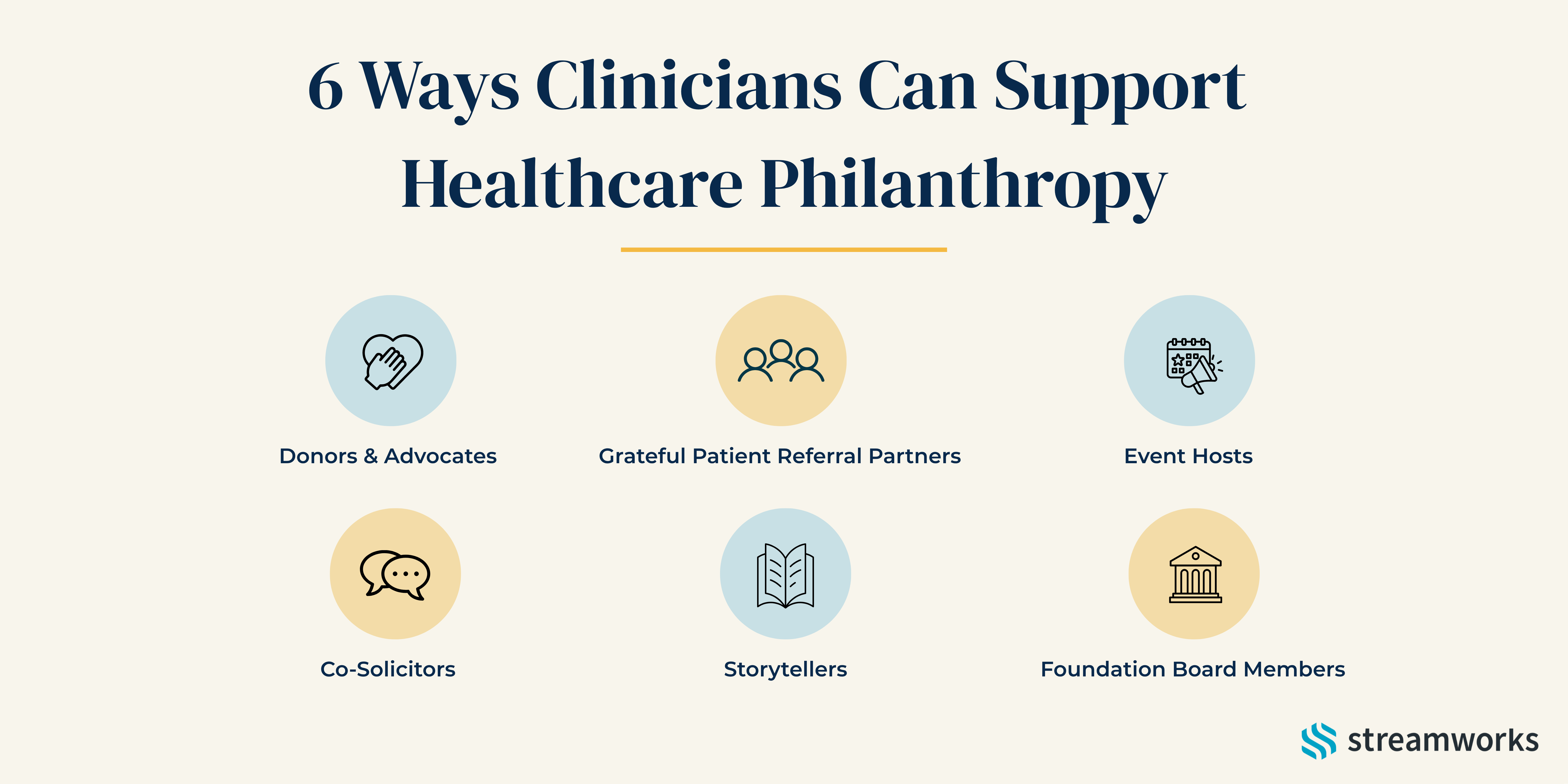
Not every clinician will want to participate in the same way, and that's okay. The most successful programs recognize individual interests, build trust, and provide clear expectations and support. For healthcare foundations, this means looking beyond a single fundraising channel and considering how grateful patient engagement fits into the broader donor journey.
A successful grateful patient program isn't simply a way to acquire new donors. It's an opportunity to build lasting relationships rooted in gratitude, trust, and a shared commitment to exceptional care.
4. Don't Overlook the Programs That Can Supercharge Your Fundraising
When healthcare foundations think about growing their fundraising, it's common to focus on acquiring new donors, increasing major gifts, or launching new campaigns. Yet, some of the greatest opportunities for sustainable growth may already exist within your fundraising program. Recurring giving and employee giving are two examples of programs that can strengthen donor relationships and create more philanthropic support.
Recurring Giving: Make It Easy to Stay Connected
A recurring giving program offers donors a convenient way to support a mission they care about. For donors, monthly giving can make philanthropy feel more manageable and accessible. For foundations, it can provide a more consistent revenue stream as well as long-term engagement. But effective recurring giving programs require strategy.
Consider how recurring giving is introduced throughout the donor journey. Could a first-time donor be invited to become a monthly supporter after experiencing the impact of their initial gift? Could an annual donor be encouraged to spread their giving throughout the year? And once someone becomes a recurring donor, what happens next?
These donors deserve thoughtful stewardship, regular impact communications, recognition of their loyalty, and opportunities to deepen their relationship.
Employee Giving: Engage the People Closest to Your Mission
Healthcare employees experience their organization's mission every day. They see the challenges facing patients and families, understand the needs of their departments, and witness firsthand how philanthropic support can make a difference. That makes employee giving a particularly meaningful opportunity for healthcare foundations.
A strong employee giving program can help build a culture of philanthropy while creating opportunities for staff to support the areas of care that matter most to them. But just like recurring giving, employee giving shouldn't be treated as a one-time campaign or an annual payroll deduction request. It should be part of an ongoing engagement strategy.
Are employees hearing stories about the impact of philanthropy within their own departments? Do they understand how foundation funding supports programs, equipment, education, or assistance for colleagues and families?
Employee giving can also create opportunities for broader engagement through volunteerism, peer advocacy, storytelling, and leadership participation.
Think Beyond the Individual Programs
The real opportunity is understanding how these programs connect to the larger donor journey. A first-time donor may become a recurring supporter. A longtime employee donor may develop a deeper interest in a particular program. A recurring donor may eventually become a mid-level or major gift prospect. These relationships are all part of a larger continuum of engagement.
Healthcare foundations that intentionally connect acquisition, stewardship, recurring giving, employee giving, mid-level giving, and major gifts are better positioned to build a sustainable fundraising program. And in a challenging fundraising environment, that kind of intentional relationship-building can make a meaningful difference.
5. Don't Forget the Other End of the Pipeline: Building a Legacy
We've talked about acquiring donors, strengthening relationships, and creating opportunities for deeper engagement. But what about the other end of the pipeline? A healthy fundraising program should also focus on the legacy donors want to leave behind.
Charitable gift planning and planned giving are important components of a comprehensive healthcare philanthropy strategy, particularly as the Great Wealth Transfer continues. For many donors, philanthropy is about more than making a gift today. It's about supporting the organizations, causes, and communities that have shaped their lives.
These conversations require strong, personal relationships. Are your major gift officers equipped with the resources and knowledge to introduce charitable gift planning opportunities? Do they have access to educational materials and experts who can help donors explore options that align with their philanthropic goals?
Healthcare foundations should also look beyond traditional gifts. From beneficiary designations and charitable gift annuities to gifts of real estate, there are many ways donors can make a lasting impact.
Ultimately, legacy giving is about more than the gift itself. It's about understanding what matters most to donors and helping them make a difference for generations to come. And often, the stories that first inspired someone to give are the same stories that inspire them to leave a lasting legacy.
The Future of Healthcare Philanthropy Starts With the Donor Journey
As we reflect on this year's AHP International Conference, one theme stands out: adaptability and resilience will be essential to the future of healthcare philanthropy. As healthcare organizations evolve to meet changing needs and financial realities, fundraising programs must evolve alongside them.
But that doesn't always mean creating new programs or pursuing the latest fundraising trends. Sometimes it means taking a closer look at the relationships already in front of us.
The most successful fundraising programs won't simply focus on the next gift. They'll focus on the entire donor journey. From the first connection to a lifetime of generosity, every interaction is an opportunity to strengthen relationships, demonstrate impact, and build a fundraising program that can adapt for years to come.
Written by Julie Smith, Director of Fundraising Strategy at Streamworks.