
Streamworks Blog
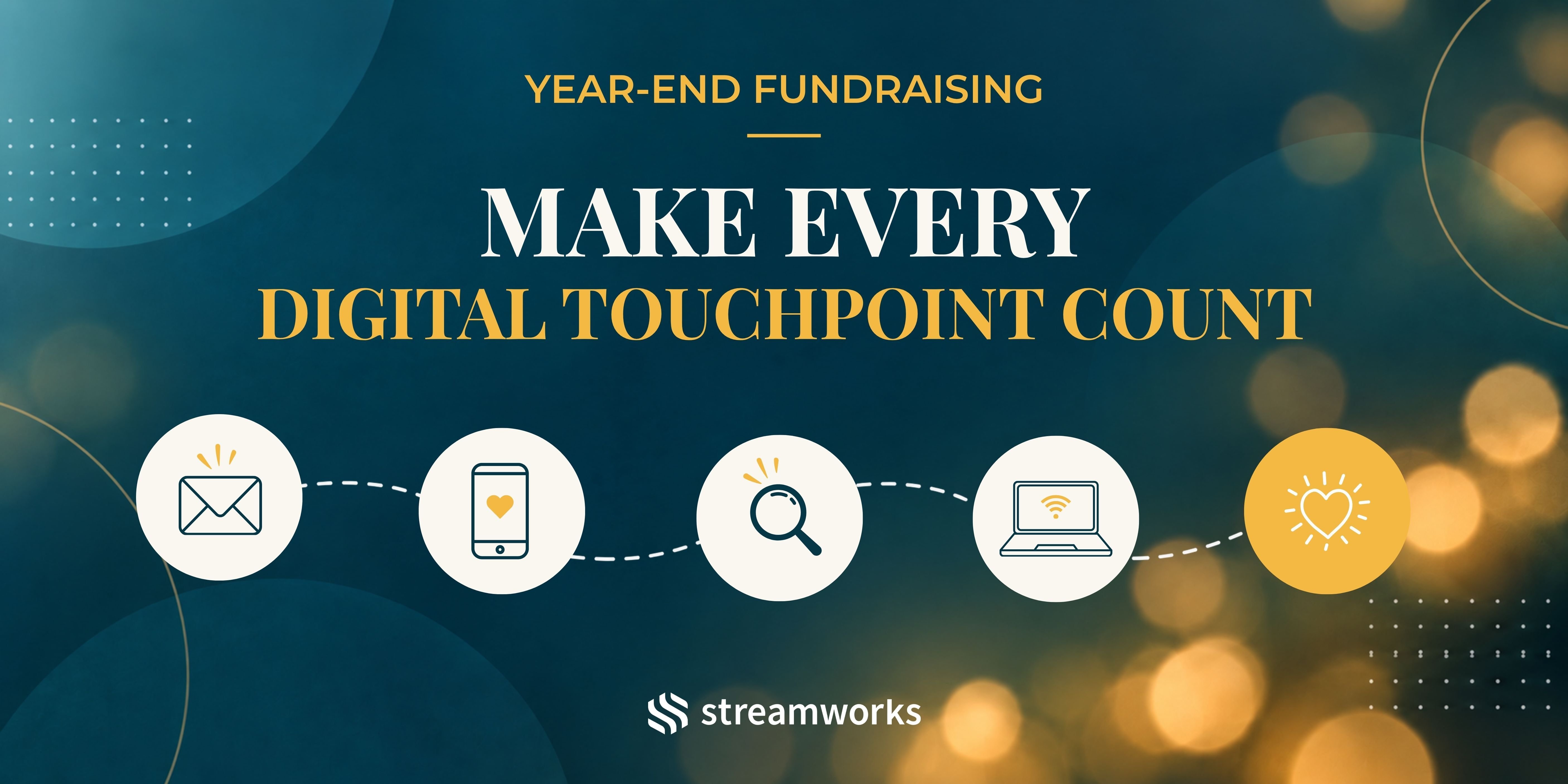
For many nonprofits, the final weeks of the year represent the single greatest fundraising opportunity. Months of planning often go into year-end direct mail campaigns, donor appeals, and Giving Tuesday initiatives. While direct mail often receives significant attention, digital fundraising can sometimes become an afterthought.
The truth is that donors often engage with organizations across multiple digital touchpoints before making a year-end gift. They may open an email, see a social media post, search for your organization on Google, visit your website, and only then decide to donate. Without a coordinated digital strategy, those opportunities can easily be missed.
The data highlights just how important the giving season is. Over 30% of new donors make their first gift in November or December, according to the Association of Fundraising Professionals’ (AFP) Fundraising Effectiveness Project (FEP). Even more importantly, these donors are among the most valuable long-term supporters. Donors acquired during November and December have a 53% higher retention rate than those acquired earlier in the year, and more than 40% go on to make a second gift.
With so much at stake, it's no longer enough to simply send a few emails to support your direct mail campaign. A thoughtful year-end digital fundraising plan ensures your messaging, storytelling, and donor experience work together across every online touchpoint.
Here are five strategies to help your organization build a smarter, more connected digital fundraising campaign this year-end.
.png?width=901&height=451&name=Copy%20of%20Savvy%20Year-End%20Digital%20Fundraising%20September%202026%20Blog%20Post%20%232%20(1).png)
1. Reach the Right Donors with Smart Segmentation
Your biggest fundraising season deserves more than a one-size-fits-all message. Most organizations spend time segmenting their direct mail campaigns, but are you giving the same level of attention to your digital fundraising?
Think about the different audiences that interact with your organization. Active donors, lapsed donors, monthly donors, volunteers, event attendees, newsletter subscribers, and so many others all have unique relationships with your mission. They shouldn't all receive the same communication.
These different audiences call for different stories, different fundraising asks, different stewardship, and sometimes even a different cadence throughout the giving season. The more relevant your message, the more likely supporters are to engage, give, and continue their relationship with your organization.
2. Build an Email Journey, Not Just an Email Schedule
Year-end email fundraising isn't about how many emails you can fit between Giving Tuesday and December 31. It's about how those communications work together and the content of those communiciations.
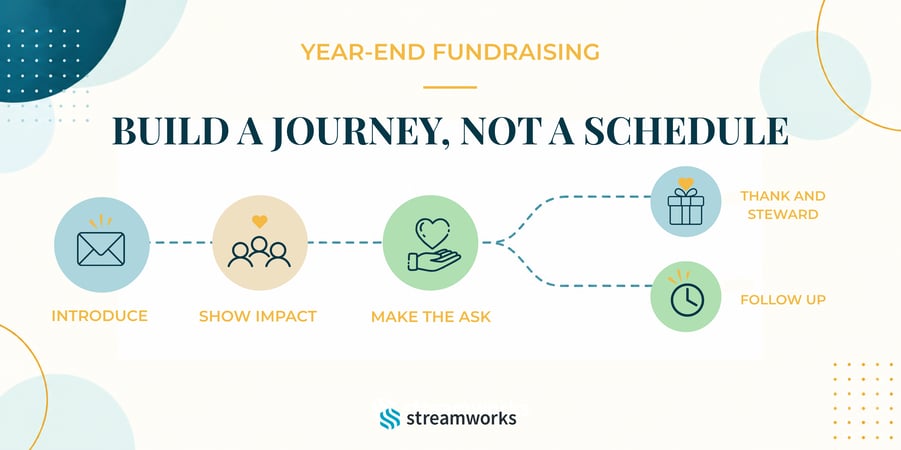
Think of your emails as a part of the donor journey. An early message might introduce a compelling story or need. The next message can demonstrate impact. Another message can make the fundraising ask more directly. As December 31 approaches, shorter reminder emails can reinforce urgency and give supporters another opportunity to respond.
Not everyone needs to stay on the same journey, and in fact, smart segmentation tells us that many audiences require personalized journeys. Someone who makes a gift after your first appeal shouldn't necessarily continue receiving the same solicitation emails as someone who hasn't responded. When possible, suppress donors from subsequent asks or move them into a stewardship message that acknowledges their support.
The goal isn't simply more email. It's the right communication, to the right donor, at the right moment.
3. Make the Donation Experience as Strong as the Appeal
Before your year-end fundraising campaign begins, walk through your online giving experience as if you were a donor. Click the donation button from an email, visit the giving page from your phone, complete the form, read the confirmation page, and open the automated receipt.
Is the process easy? Does the giving page reinforce the story and message that brought the donor there? Is it immediately clear what their gift will help accomplish? Are there unnecessary fields or steps creating complication?
Don’t overlook mobile. A donor who encounters your campaign through email, social media, or search may be giving entirely from a phone. Your year-end campaign should be just as easy to understand and complete on a small screen as it is on a desktop.
4. Be Present When Donors are Looking for You
Donor engagement does not always follow a direct path from appeal to gift. A donor may receive a direct mail piece, encounter campaign messaging on social media, and later search for the organization online before deciding to give. Others may discover an organization while researching causes to support at year-end.
A strong digital presence helps ensure those moments of interest can lead to action. Websites should clearly communicate mission and impact, donation pages should be easy to find and navigate, and social media should reinforce the stories and messages used throughout the broader campaign.
Search visibility can also play an important role. For eligible nonprofits, Google Ad Grants can help connect potential supporters with relevant mission content, while paid digital advertising can extend campaign reach and re-engage priority audiences during the competitive and noisy year-end season.
The goal is not to maintain a presence on every digital channel. It is to create a consistent, recognizable experience wherever donors encounter the organization.
5. Don't Let December 31 Be the End of the Campaign
A year-end gift should be the beginning of the next donor experience, not the end of the fundraising calendar. Pay attention to who responded, which audiences performed best, which emails generated engagement, where online gifts originated, and how donors moved through your digital experience. Those insights can help inform segmentation, messaging, channel investment, and testing in the year ahead.
Then focus on what happens after the gift.
A prompt thank you is only the beginning. Welcome new donors, demonstrate the impact of their support, and give them reasons to stay connected beyond the giving season. This is particularly important for first-time donors acquired at year-end, when your organization has an opportunity to turn a seasonal gift into a longer-term relationship.
Make Every Touchpoint Work Together
A savvy year-end digital fundraising plan doesn't require being on every platform or adding more communications simply for the sake of being visible. It requires being intentional about how each touchpoint contributes to the donor experience.
Segment your audiences. Build a connected email journey. Remove complication from giving. Make it easy for donors to find you.
When direct mail, email, search, social media, your website, and the giving experience reinforce one another, year-end fundraising becomes more than a collection of individual tactics. It becomes one connected campaign and a foundation for the relationships you'll build in the year ahead.

%20(1).png?width=352&name=download%20(1)%20(1).png)
.jpg?width=352&name=Healthcare-Marketing-Sample-Mock-PC-1%20(1).jpg)
.jpg?width=352&name=Omni-channel-Cropped%20(2).jpg)