Streamworks Blog
.png?width=5625&height=2813&name=Copy%20of%20Savvy%20Year-End%20Digital%20Fundraising%20September%202026%20Blog%20Post%20(1).png)
Graduation year, degree or academic program, athletic participation, student orgs, giving history, parent relationships, reunion years. The list of ways educational institutions can segment their audiences for fundraising can get long and complex quickly. With so many possibilities, it can be challenging to determine where to start and which method will actually help you connect more personally with your audiences.
Schools, colleges, and universities often have a unique advantage when it comes to segmentation because their relationships with constituents can span years or even decades.
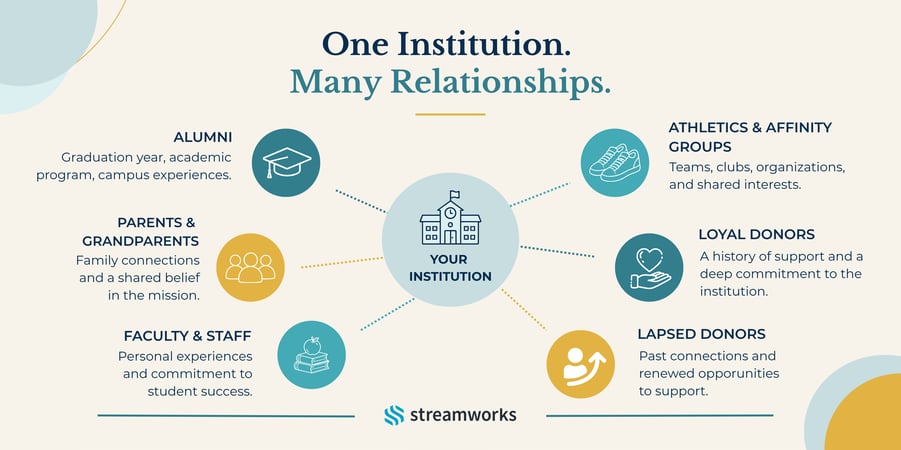
- An alumnus may have memories of a particular era on campus, a favorite professor, an athletic team, or a club or organization that shaped their experience.
- Parents and grandparents may feel connected to the institution because of what it means to their family.
- Board members, faculty, and staff may each have their own personal reasons for caring about the institution and wanting to see it succeed.
These connections, history, and memories create opportunities to make fundraising communications more personal. Yet, good segmentation isn’t about creating a different version of an appeal for every data point in your database. It’s about identifying the information or stories that can help you speak more meaningfully to different groups.
Someone who graduated 40 years ago likely has a very different relationship with the institution than someone who graduated five years ago. A former student athlete may connect with memories that are completely different from someone who participated in student government or the arts.
The goal is to use what you know about your audiences to make your fundraising feel less generic and more like a communication that recognizes their unique relationship with your institution. Which segmentation strategies can help you do that?
Tap Into the Power of Nostalgia
Graduation year is one of the most common ways to segment an alumni audience, but its value goes beyond just knowing when someone graduated. Think about what campus and different buildings looked like during that time. Consider traditions that may have existed during that era and if the institution had a different mascot, name, or even school colors.
These details resonate with alumni and can bring back fond memories that reconnect them with the institution. This can be even more meaningful during reunion and milestone years.
Nostalgia can also help bridge the past and present for alumni. Perhaps it’s reminding them of an experience that was important to them and then sharing how philanthropic support makes that experience possible for today’s students. Campus may look different, programs may have evolved, and time may have passed, but the impact continues.
The Importance of Affinity Groups
Graduation tells you when an alumnus was a part of your institution, but affinity groups tell you how they were connected and what their experience was like. One alumnus may have fond memories of playing a sport, while another’s best experiences may have come from their involvement in student government.
If you have reliable affinity group data in your database, consider how it could influence your fundraising stories or the impact stories you share. Someone who participated in athletics may be most interested in hearing about the team’s current season. Someone who studied law, nursing, or business may feel connected to the institution by hearing about that particular program.
You don’t need to have separate segments for every single affinity group. Often changing one paragraph, image, or featured story is enough to make the appeal feel more personal.
.png?width=901&height=225&name=Copy%20of%20Savvy%20Year-End%20Digital%20Fundraising%20September%202026%20Blog%20Post%20%232%20(2).png)
Think About Who Is Delivering the Message
Segmentation of appeals doesn’t just mean who is receiving the communication. It can also be beneficial to consider who signs the letter or sends the email.
A message from the head of school or president has its place in the strategy, but there are certainly times when hearing from a peer can create a different kind of connection for recipients. Think about a reunion appeal signed by a member of that graduating class who can share a memory of their time at the institution, or a former athlete writing to fellow former athletes in a fundraising appeal.
This approach gives the person signing the appeal the chance to communicate the shared connection. This can help the appeal feel more personal than a message coming solely from the institution.
Think Beyond the Alumni Relationship
Alumni may be the largest and most obvious audiences for many educational institutions, but they aren’t the only group of people who share meaningful relationships with your mission. Parents, grandparents, board members, faculty, staff, and former parents may all have reasons to give. For independent schools and other K-12 institutions, family relationships can create an important opportunity for segmentation.
Consider a grandparent who watched their grandchild thrive at your school. They have a unique connection that is different from that of an alumnus. A parent whose child is graduation may respond to a different message than a parent whose child is just starting at the institution.
These unique relationships all offer ways to personalize appeals by communicating with the audience in a relevant way.
Don't Forget Giving Behavior
Personal connections and affinities are only one side of segmentation. It’s also important to consider how someone has engaged with your fundraising when determining how to communicate with them.
A first-time donor, for example, is at a very different point in their relationship with your institution than someone who has made a gift every year for 20 years. A recently lapsed donor may need a reminder of the impact they have helped make possible, while a loyal donor may be ready to hear about an opportunity to continue their support.
Giving history, recency, frequency, and giving level can all help you determine what to say to a donor and what you should ask. Combining these behaviors with other segmentation can make the strategy even stronger. Instead of just identifying an alumnus from the Class of 1980, for example, you may identify a Class of 1980 alumnus who played basketball and has given 12 consecutive years. This all enables you to know more about the relationship behind the name in your database.
Start With What Makes a Meaningful Difference
With all of these possibilities, segmentation can quickly become complicated, but it’s all about starting with the information you have. If a segment gives you an opportunity to tell a more relevant story, recognize a shared memory, or adjust an ask, it may be worth using.
You can also start small with segmentation and see what works. Testing a reunion message against your broader appeal or featuring a student-athlete story for alumni who participated in athletics may give you meaningful insights.
Educational institutions have incredibly strong relationships that are built over time. These relationships have unique memories, experiences, and reasons for caring about your mission. The best segmentation strategies help you recognize those relationships, become more personal, and strengthen your fundraising.