Streamworks Blog
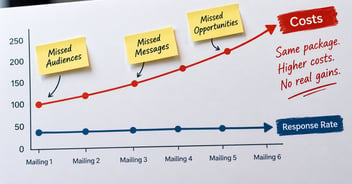
Direct mail marketers know they should test. Testing can help improve response rates, identify stronger creative, refine offers, and provide valuable insight into what motivates an audience to respond. Yet many direct mail programs continue mailing the same control package campaign after campaign without conducting meaningful tests.
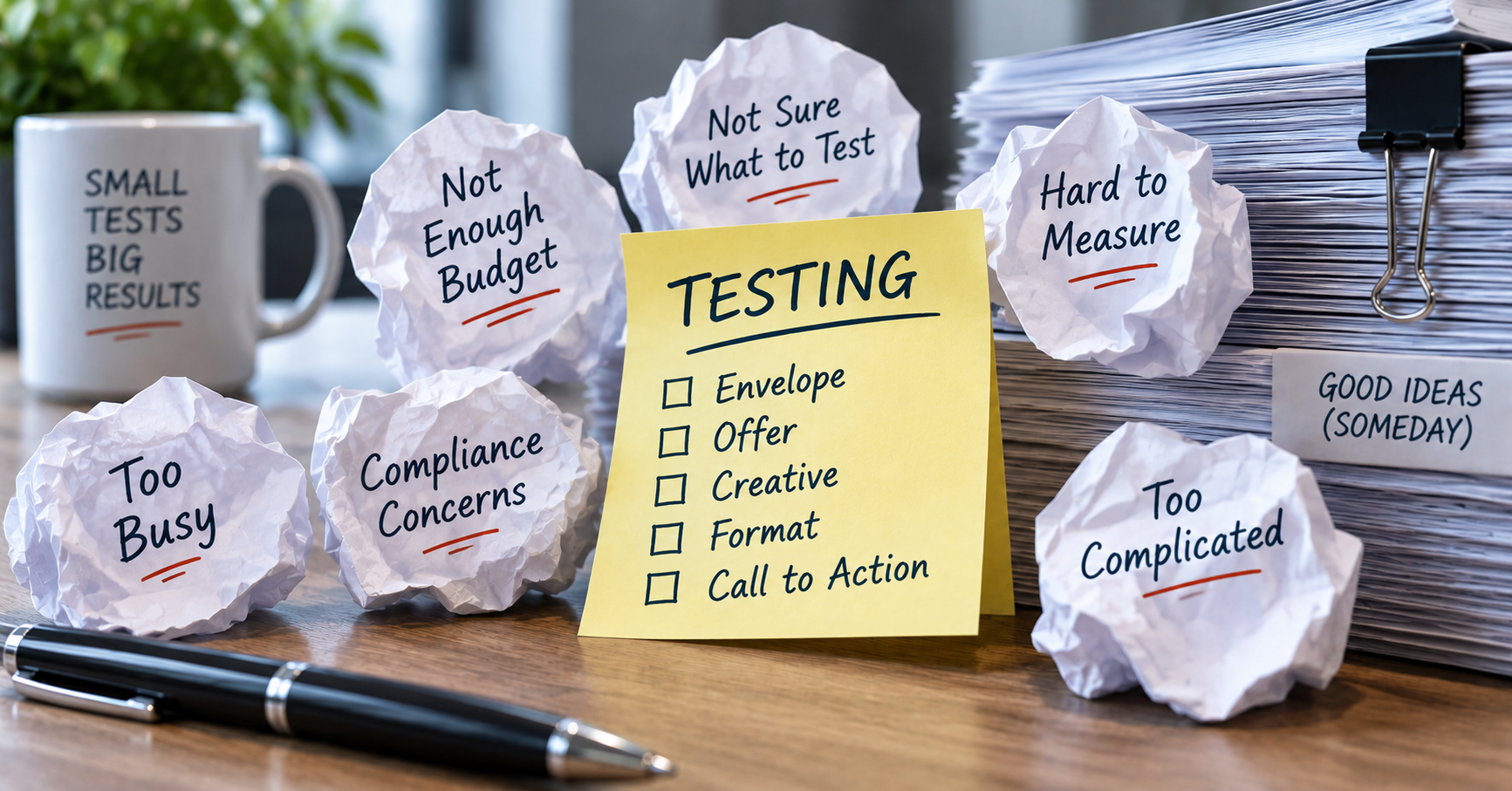
Why? The problem usually is not a lack of ideas. It is the perceived cost, complexity, and risk of direct mail testing.
Unlike changing a digital ad or email subject line, traditional direct mail testing can affect creative development, data preparation, print production, inventory, inserting, postage, and tracking. When marketers are working against a fixed mail date and a fixed budget, testing can quickly move from "something we should do" to "something we'll do next time."
And next time often never comes.
Why Is Direct Mail Testing So Difficult?
Direct mail is a physical marketing channel. Every variation has to eventually become a printed, produced, and mailed piece.
Historically, testing could require separate creative versions, additional production setup, and careful segmentation of the mailing file. Depending on the test, it could also require additional inventory or finishing.
Then there is measurement.
A marketer needs to determine how to track response before the mail enters production. That might include unique QR codes, promotional codes, campaign URLs, phone numbers, reply devices, or another way to connect responses to the appropriate test group.
All of this takes planning.
Research reported by MarketingCharts has identified developing a sustainable testing strategy and tracking direct mail performance among the challenges facing marketers using the channel.
The result is understandable.
When the choice is between mailing the campaign on schedule and adding another layer of complexity, execution usually wins.
The Control Package Becomes the Default
Most mature direct mail programs have a control package.
A control is valuable because it provides a benchmark. It represents the creative, offer, format, and messaging combination that has performed well enough to continue using.
The problem begins when the control stops being a benchmark and becomes a permanent solution.
"We know this works" gradually becomes "this is what we mail." Those statements are very different. A control tells you what has worked in the past. It does not tell you whether something else could work better today.
What Should You Test in a Direct Mail Campaign?
Direct mail testing does not always require a completely different package.
In fact, smaller controlled tests can often provide clearer information because fewer variables are changing. USPS® recommends testing individual elements while keeping the rest of the mailing consistent. Depending on the campaign, those elements could include:
• Outer envelope teaser copy
• Headlines
• Calls to action
• Offers
• Personalized messaging
• Images
• QR code placement
• Reply devices
• Envelope design
• Audience segments
• Signature treatments
• Promotional messaging
The objective is not simply to produce two different mailpieces. The objective is to answer a question.
For example:
Does benefit-focused envelope messaging generate a higher response than our current teaser?
That is a testable hypothesis.
Digital Printing Has Changed Direct Mail Testing
One of the most important developments in direct mail production is the growth of digital printing and variable data printing.
Modern digital print technology lets elements of a mailpiece change within a production run without creating entirely separate traditional print runs. That creates opportunities for direct mail marketers to think differently about testing. Variable data printing can change headlines, images, messaging, offers, calls to action, and personalization based on a campaign's data and production configuration.
At Streamworks, this production capability is part of how we approach direct mail testing. Rather than viewing testing as something separate from production, we look for opportunities to build learning into the mailing itself.
Make Every Direct Mail Campaign Answer a Question
A better question than "Should we test this campaign?" may be: What could we learn from this campaign?
You are already investing in data, creative, direct mail printing, production, and postage. That campaign can generate response. But it can also generate information. Over time, those individual learnings can create a much stronger understanding of your audience.
You may discover that one type of envelope messaging consistently performs better.
You may learn that certain audiences respond differently to personalization.
You may find that a particular call to action improves response while another creative change makes little difference.
That knowledge compounds.
Direct Mail Testing Should Be a Process, Not an Event
The strongest direct mail testing programs are not built around one enormous annual test.
They create a cycle:
-
Develop a hypothesis.
-
Design the test.
-
Produce the campaign.
-
Track response.
-
Analyze the results.
-
Apply what you learned.
-
Develop the next hypothesis.
That is how direct mail performance improves over time.
Streamworks helps organizations build testing, variable data printing, and performance measurement into their direct mail strategy and production process. Because every campaign represents more than an opportunity to generate a response. It is an opportunity to learn what could generate a better response next time.