
Streamworks Blog
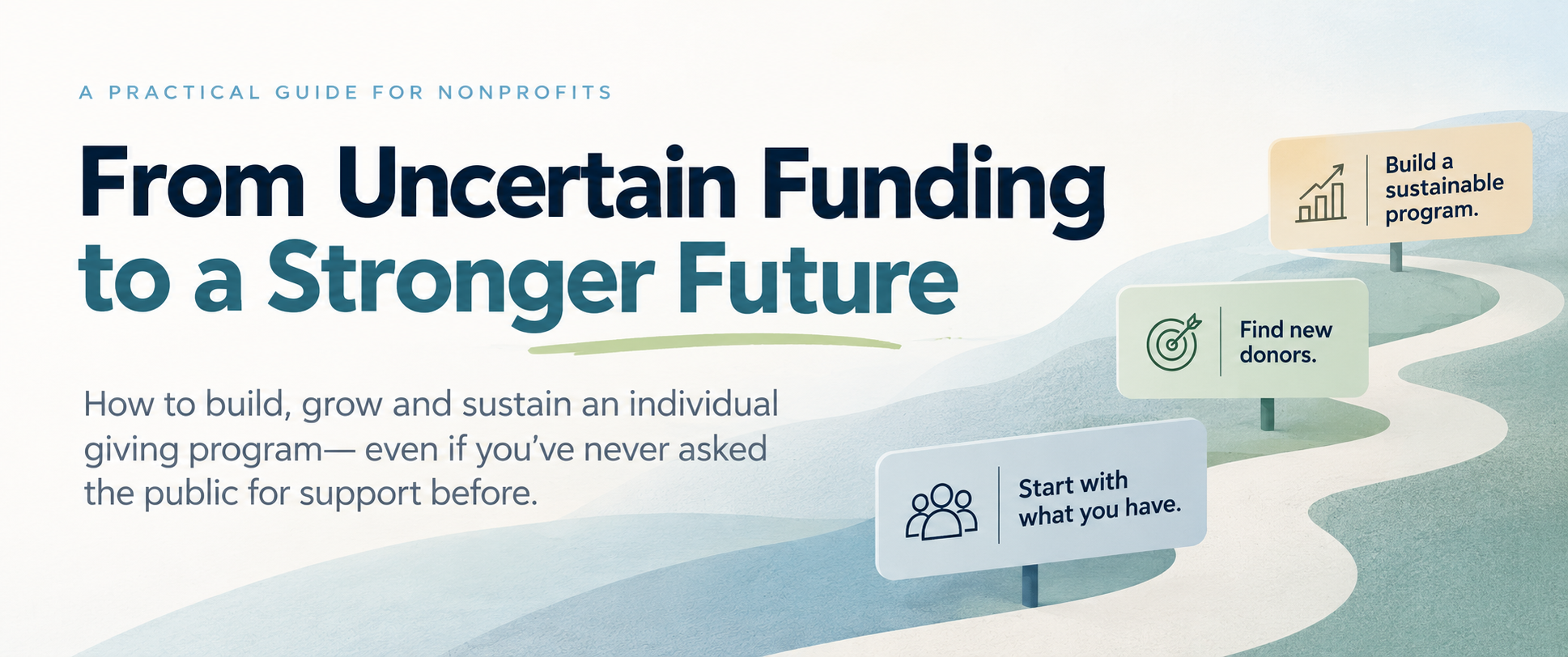
For years, your nonprofit may have relied on foundation grants, corporate contributions, or a handful of major donors to fund your mission. Your development team knows how to write compelling grant proposals, cultivate funding partners, and demonstrate the impact of your work.
But what happens when those funding sources become harder to secure?
Perhaps a long-standing grant wasn't renewed. A corporate partner reduced its contributions. Or competition for available funding has increased.
Suddenly, building an individual giving program becomes more than an interesting idea. It becomes an important part of your organization's future.
The challenge? Your organization may have years of fundraising experience but very little experience asking the general public for donations.
And that's a different kind of fundraising.
Your Development Team May Not Have the Expertise You Need
Grant writers and major gift officers bring tremendous value to nonprofit organizations. They understand how to develop funding proposals, cultivate relationships, and communicate organizational impact.
But individual giving through direct response requires additional skills.
You need to know how to identify prospective donors, develop an appeal that motivates someone to give, manage mailing lists, coordinate production, and measure campaign performance.
Many nonprofits don't have a direct response marketer on staff. And hiring one may not be financially realistic when you're just beginning to explore individual giving.
The good news is that you don't necessarily need to build an entire marketing department to get started.
You do, however, need a plan.
Start With People Who Already Know Your Organization
Before purchasing mailing lists or launching a large acquisition campaign, look at the relationships you've already developed.
Your organization may have connections with volunteers, event attendees, community partners, board members, former supporters, and people who have expressed interest in your mission.
Some of these individuals may be willing to make a financial contribution if they're given a compelling reason to participate.
Start by reviewing the information you already have. Identify appropriate audiences, confirm that your records can be used for fundraising outreach, and organize your contacts into manageable groups.
Your first campaign doesn't need to reach thousands of people. It needs to help you understand whether your message resonates with potential supporters.
Learn to Tell Your Story to an Individual Donor
A grant proposal and an individual fundraising appeal have different jobs.
A grant proposal often needs to explain your organization's qualifications, program structure, financial requirements, and measurable outcomes.
An individual appeal needs to make someone care enough to take action.
That means moving beyond describing what your organization does and helping readers understand why their personal support matters.
Consider the difference.
Institutional fundraising message:
"Our organization provides comprehensive community-based services designed to improve access to essential resources."
Individual giving message:
"When a family in our community needs help, your gift can make sure someone is there to answer the call."
Both communicate the organization's mission, but the second gives an individual a role in making the work possible.
A strong appeal should explain the need, demonstrate the organization's impact, and make a specific request for support.
It should also make donating easy, whether through a reply envelope, a secure online donation page, or another convenient response method.
Make Sure You're Ready to Receive Donations
Before sending your first appeal, think about what happens when someone responds.
Can your organization process gifts efficiently? Do you have a donor database or another reliable way to track contributions? Can you acknowledge donations promptly and provide appropriate receipts?
Most importantly, do you have a plan to communicate with those donors again?
Individual giving isn't simply a transaction. It's the beginning of a relationship.
Someone who contributes $50 today may become a recurring donor, volunteer, advocate, or future major supporter. But that relationship needs attention.
Even a small program should have a basic process for recording gifts, thanking donors, and sharing the impact of their generosity.
Your First Mailing Is a Learning Opportunity
It's natural to want your first appeal to generate immediate revenue. But a new individual giving program shouldn't be evaluated solely on the results of one mailing.
Your initial campaign can help answer important questions.
Who responded? What was the average gift? Which messages resonated with supporters? How much did the campaign cost?
These early results can help shape your next mailing.
They can also help you determine whether your organization is ready to expand beyond people who already know your mission.
Individual Giving Is a Long-Term Investment
Individual giving can help diversify your nonprofit's funding sources, but it isn't an immediate replacement for a lost grant.
Building a sustainable donor base requires time, financial investment, and consistent communication.
That investment can begin modestly, using existing relationships and available resources. As the program develops, you'll have opportunities to reach new audiences and introduce more sophisticated fundraising strategies.
The important thing is to start with realistic expectations and a plan for growth.
Your organization already knows how to make a difference. Individual giving creates another opportunity to invite people to be part of that work.
What's Next?
Once you've established an initial base of individual supporters, how do you find donors who have never heard of your organization?
In Part 2 of this series, we'll explore direct mail acquisition, rented mailing lists, and how to begin reaching prospective donors beyond your existing network.